In this shortened version of Habermas’ outlining of public sphere, we get a definition of the concept public sphere as: “a realm of our social life in which something approaching public opinion can be formed.” The concept is that in a public sphere, people assemble together as one acting public body, leading to public reason which contrasts to the governing state body. It is essentially organized discussion, creating public consensus which then can in turn influences political action. Habermas also argues that with the historical change from a feudal constitutional society the public sphere was able to come about and as it did, public broadcast media like newspapers played a vital role.
Historically, public sphere is associated with the “coffeehouse discussions” where you see groups assembling for debate and discussion. It was open, disregarded status, and based on rational thought with a goal of reaching consensus. Although on the surface the sphere is understood as open and free to anyone, of course it wasn’t like modern society. The sphere was free to white educated middle class males as far as my understanding goes. But that aside, the public sphere is still where the people have the position to influence action and influence the governing bodies. Other important historical events that you see as the public sphere emerges is the growing idea of a separation of church and state, which arguably only came about after the Reformation and the idea of a person having an individual and direct relationship with God, taking away much of the power of the Church.
The public sphere has and is continually changing. It was once about a physical space that could be occupied, now there are fewer coffeehouse meetings. Media was once just a source of information, but as the capitalistic society grew, the more the media realized it’s value as another capital-making system through advertisement and news-managing. If you follow along the arguments of intellectuals like Noam Chomsky, the broadcast medias [newspapers, news stations] are purely a medium of “manufacturing consent.” They exhibit the news in the interests of their monetary-backbone, the corporations who own them. In our society, the majority of media is controlled by a few companies, and their interests correlate with the products of their medias.
In my past studies, I came across this concept of public sphere through “From Public Sphere to Public Screen: Democracy, Activism, and the Lessons of Seattle” (2002) by DeLuca and Peeples, which looks at the transitioning of the concept of public sphere with the onset of new media. They use the common definition of public sphere as an open, public, physical space where public opinion is formed. The transition is that public opinion is formed out of a new, pseudo-physical “public screen.” They talk about how the way information is shared nowadays, that you can’t really distinguish between public and private spheres. The separation between public and private is slimmer because of the mobility of our technology, as you can carry the “screens” with you. This new way of information transfer is based around the inception of new media.
One of the other points to DeLuca and Peeple’s argument, is that events can be staged for the screen, as another way of manufacturing consent, or just drawing attention to something. “Image Events” can be very persuasive, cause the public to empathize with an event, or make them hardened against a subject (like violence). Image events exist to ask the public to watch and to see their point of view. And the audience isn’t just an objective public observer, but they are immersed in the images and thus will form an opinion of the situation. DeLuca and Peeples talk about the 1999 WTO protest and riots in Seattle in their article. The media predominantly showed images of violence instead of debate and delegation, which does grab the attention of the viewers, so whether that’s good or bad, it is successful in getting viewership. Not as much information was given to the public as the event happened so any kind of hope for public consensus is lost.
The contributions of new media to the public sphere are varied. For one thing, “screens” are widely available, and can lead to instantaneous social action. Social movement can happen much more rapidly than ever, and be more widespread. There is also some difficulty in getting social action to spread, like for instance when the topic of action is against established structures which people are hesitant to change. New media doesn’t work face-to-face, it does not necessarily occupy a physical space like the public sphere did. With the screen you don’t have to necessarily plan or produce flyers or anything tangible. There are less limits on who can be a member of the public screen - basically anyone with a screen. And anyone can be both a sender and a receiver. This can be seen in the alternate reality game “World Without Oil" where the spectators were also producers.
Do these differences lead to more consensus? Hard to say. The principles of how people come to a consensus don’t necessarily change with new media, however it does lead to more shared information, and increased availability of information. When working at it’s full potential, the screen works like the media used to work, as an information sharing medium. There is still a danger that the screens can become what old forms of broadcast media have, and there can still be bias in the information, and still some consent manufacturing. The ability to be more free though, is still there, and that is a positive difference.
Showing posts with label media. Show all posts
Showing posts with label media. Show all posts
Tuesday, October 20, 2009

Monday, September 7, 2009
McLuhan and Twitterisms
I’ll be honest, I had a hard time with McLuhan’s theories on media. With just two of his readings, I put him on level with Chomsky or Foucault. I only get about half of what they say, but damn I feel smarter for reading them.
Part of McLuhan’s argument is that technology is an extension of ourselves. He’s famous for saying “the medium is the message,” that is to say, that a medium (a technology) is the part that affects the world, not the content that the medium is communicating. This I understood (I think). Culture is built upon technology. Each new technology is built upon a previous technology. (Of course I then wonder wouldn’t there be an “original technology”? Something that started off everything that exists now? But that’s another blog...) For McLuhan, the invention of the phonetic alphabet, an arbitrary system as we know from Saussure, was the catalyst that took the ancient cultures from multi-sensory to visually focused, and set off a series of technological innovations leading us to the present and the internet. McLuhan though, believes that there are these technologies/mediums that communicate their own content, but the message isn’t in the content. It is in the medium itself. The medium is what influences us.
So, I tried to apply this to the media/technology that I use and know and what the mediums themselves teach me, and not their content. I only recently began tweeting, although I’ve known of it for a long time and had done some browsing to see what it was about. At first glance it seemed frivolous to me. People were having incomplete conversations, making observations and sending them out in to the internet void to be commented on not. (Enter made-up example tweets off the top of my head: “Going to the movies later with Jordan!,” “Saw a Sarah Palin look alike today and really wanted to break her glasses in two” etc. etc.)
Ok so while that was what I thought was the content of the majority of tweets out there, and the reason I avoided tweeting until it was asked of me for class, I have to admit, since I have begun using twitter I’ve become fascinated with the process of it.
Most of the tweets out there are conversational. A large number are self-promotional. A good amount is the sharing of information such as youtube, news stories, blogs. Then there’s this guy. Some *twitteres are actually trying to produce literature in 140 characters? That’s interesting since many fear the internet for making us illiterate.
What I find intriguing is how many different ways there are to fill 140 characters with. This to me is the epitome of the “medium is message” argument. I would say that the medium of twitter is the 140 character limit, the content varies from person to person. What then can we make of such short snippets of story? Stories have a long history in the world. Stories existed long before written language, in the oral traditions of ancient civilizations. In fact, the way I see it, most of the mediums that McLuhan discusses (newspapers, movies, television in particular) are story-telling mediums. Human communication, and maybe this is my Western-based perspective, is about story-telling.
So, if the medium limits our story-telling ability, what does that do to our culture? Do we adapt and learn to bottom-line stories? Does it limit our thoughts or teach us to think quicker on our feet? Do debates get shortened to one-line blurbs? I think these things already happen in many instances and the danger I see is that the world is not so black-and-white. And while 140 characters is a nice bit to start off a conversation or a debate, I ask is it enough to fully explain the world? One of the things that McLuhan also contends is that we are largely unaware of the affect that media has on us. Luckily though, as a student in this program, we are learning to explore the mediums of new media and analyze them and pick them apart. And that’s largely what McLuhan was also getting at in his writings. He said that there are a few who don’t just sit as on the sidelines as media changes our minds and culture and that the only trick with “new media” is the speed of it. We have to think quicker because the medium changes so quickly. Maybe that’s something that the twitter-medium is preparing us for. To think quicker and more concisely, in fewer characters.
My opinion of the affects of shortened messages is not complete and I would love to hear some others thoughts on the matter.
*Side note: What is the noun of a person who tweets? Tweeterer?
Monday, August 31, 2009
Saussure & Plato
Saussure: the internet's impact on literacy
Have you heard that the internet is making us stupid? That kids today read and write less than they used to and things like facebook are permanently ruining our society? OMG!
What I find humorous about the backlash against texting is that there is just as much abbreviation and shortening of words in speaking as there is in writing. Shoulda’ Coulda’ Gonna’ Ain’t - While these are not “proper” words (at least if you asked a typical English teacher), the thing about a Linguist is they will recognize that people use those contractions everyday and understand them so therefore they are linguistically sound.
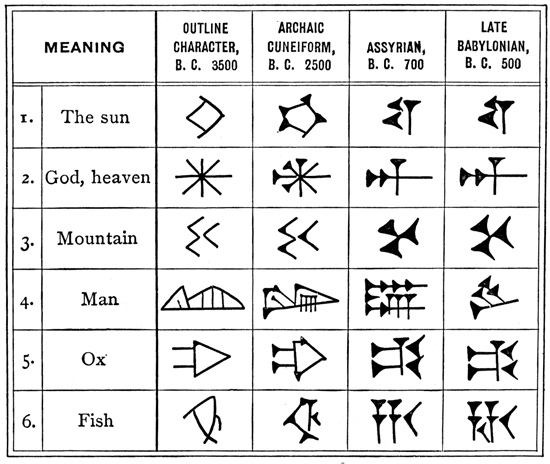
If we think about it, spoken language came before written. Writing was the afterthought. Letters as we know them now are very abstract. Originally though, there was some attempt to make them representative, but by creating an abstract alphabet there is actually more possibilities of combinations. But the important thing is that language existed before writing. Socrates even, regarded writings as a copy of ideas that already exist. Writing’s role is basically as a medium of expressing ideas, and one that is based on the spoken word.
Saussure, being a linguist, understands language is fluid, not fixed by society or time. Words and sounds are abstract and arbitrary representations of the ideas of humans. And because language changes over time, it adapts to the communicative needs of its society. Understanding that, it’s easy to see that new words will enter a language and existing words will change. That kind of change has existed since the existence of language in general.
A linguist would also point out that writing is slower to change than speaking. But what the internet seems to do, is expedite the process some. Now knowledge is available to anyone with an internet connection. The increase in resources also has an affect on how linguists look at language. With the internet there is an infinite amount of possible linguistic data available for study, just as there are many unlimited resources available for those who want to learn. Yet there is this exaggerated hype around this change, and how it’s “ruining us.” To borrow from the editor of the Official Dictionary of Unofficial English:
People who are upset at these new modes of writing - texting, etc. - need to stop and recognize that at its very core, language is arbitrary and will change eventually.
Plato: where does the public converse?
In Plato's Phaedrus, Socrates and Phaedrus discuss themes of love and poetry. I will focus on their conversations about the art of rhetoric and speaking. They each make different arguments about what it means to be a good speaker. For example, Phaedrus argues that a good speaker can persuade, and Socrates responds that a speaker must also know the truth. What sticks out to me however, is the way that Socrates and Phaedrus discuss these ideas through question-and-answer dialectics. What Plato has put together is basically this dialogue between two great thinkers, each trying to persuade the other by questioning their arguments. And through this cross-examination they find truth, in this case regarding the art of speaking.
Deluca and Peeples’ idea that the world has transitioned from a public sphere to a public screen is interesting compared with the dialectics of Soc/Phaed. The idea of public sphere comes from Habermas, who explained that public discussion was done out in the world, in face-to-face contact, in a pubic “arena.” D&P recognize, and want others to recognize, that public communication is now occurring through screens - television, cellphones, computers, etc. And its not that these screens are any less sophisticated, but they are just different modes of communicating.
I think if Socrates was alive today, he would use whichever means there was for dialectics and to continue his pursuit of truth and knowledge. He would host a blog to discuss “the art of internet-rhetoric.” Is it an art? Can it be taught? Is it better to be persuasive or truthful? Also with the transition from sphere to screen, there is increased opportunity for everyone to be involved in the discussions of the time. You don’t have to worry about getting to the right place at the right time; you don’t have to be a professional rhetorician. All you need is an opinion, a site to voice it on, and a screen! LOL!
Have you heard that the internet is making us stupid? That kids today read and write less than they used to and things like facebook are permanently ruining our society? OMG!
What I find humorous about the backlash against texting is that there is just as much abbreviation and shortening of words in speaking as there is in writing. Shoulda’ Coulda’ Gonna’ Ain’t - While these are not “proper” words (at least if you asked a typical English teacher), the thing about a Linguist is they will recognize that people use those contractions everyday and understand them so therefore they are linguistically sound.
If we think about it, spoken language came before written. Writing was the afterthought. Letters as we know them now are very abstract. Originally though, there was some attempt to make them representative, but by creating an abstract alphabet there is actually more possibilities of combinations. But the important thing is that language existed before writing. Socrates even, regarded writings as a copy of ideas that already exist. Writing’s role is basically as a medium of expressing ideas, and one that is based on the spoken word.
Saussure, being a linguist, understands language is fluid, not fixed by society or time. Words and sounds are abstract and arbitrary representations of the ideas of humans. And because language changes over time, it adapts to the communicative needs of its society. Understanding that, it’s easy to see that new words will enter a language and existing words will change. That kind of change has existed since the existence of language in general.
A linguist would also point out that writing is slower to change than speaking. But what the internet seems to do, is expedite the process some. Now knowledge is available to anyone with an internet connection. The increase in resources also has an affect on how linguists look at language. With the internet there is an infinite amount of possible linguistic data available for study, just as there are many unlimited resources available for those who want to learn. Yet there is this exaggerated hype around this change, and how it’s “ruining us.” To borrow from the editor of the Official Dictionary of Unofficial English:
“It's a natural instinct to be a little, I guess not really frightened but a little frustrated by the language changing around you. You think, I've just mastered this thing. I've just got it down pat, and here you go pulling the rug out from under me yet again. But the thing Morgan that I would say is, you still have the comprehension. You do understand what they're talking about. The forms might vary from what you prefer, but you're still getting the message.”
People who are upset at these new modes of writing - texting, etc. - need to stop and recognize that at its very core, language is arbitrary and will change eventually.
Plato: where does the public converse?
In Plato's Phaedrus, Socrates and Phaedrus discuss themes of love and poetry. I will focus on their conversations about the art of rhetoric and speaking. They each make different arguments about what it means to be a good speaker. For example, Phaedrus argues that a good speaker can persuade, and Socrates responds that a speaker must also know the truth. What sticks out to me however, is the way that Socrates and Phaedrus discuss these ideas through question-and-answer dialectics. What Plato has put together is basically this dialogue between two great thinkers, each trying to persuade the other by questioning their arguments. And through this cross-examination they find truth, in this case regarding the art of speaking.
Deluca and Peeples’ idea that the world has transitioned from a public sphere to a public screen is interesting compared with the dialectics of Soc/Phaed. The idea of public sphere comes from Habermas, who explained that public discussion was done out in the world, in face-to-face contact, in a pubic “arena.” D&P recognize, and want others to recognize, that public communication is now occurring through screens - television, cellphones, computers, etc. And its not that these screens are any less sophisticated, but they are just different modes of communicating.
I think if Socrates was alive today, he would use whichever means there was for dialectics and to continue his pursuit of truth and knowledge. He would host a blog to discuss “the art of internet-rhetoric.” Is it an art? Can it be taught? Is it better to be persuasive or truthful? Also with the transition from sphere to screen, there is increased opportunity for everyone to be involved in the discussions of the time. You don’t have to worry about getting to the right place at the right time; you don’t have to be a professional rhetorician. All you need is an opinion, a site to voice it on, and a screen! LOL!
Subscribe to:
Posts (Atom)


 Posts